
Production process
1. Raw material preparation
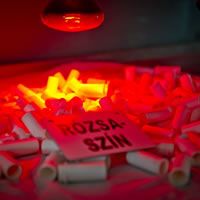
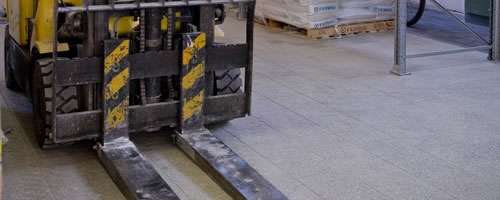
Each stage of the ceramic manufacturing process needs a lot of care never to be left precision. Components are checked and classified and milled in our milling machines in to homogenous powder later with the appropriate production criteria in mind, test it.
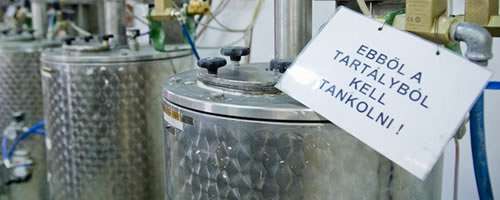
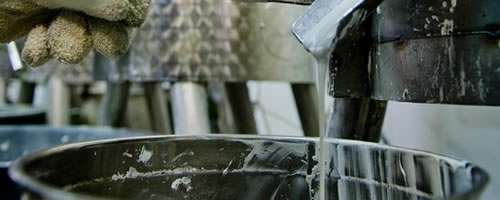
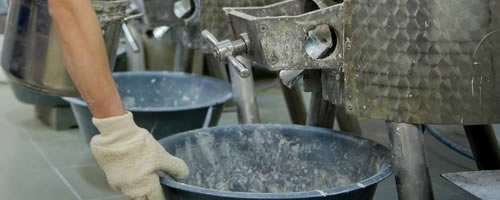
2. The preparation of ceramic molding dollop
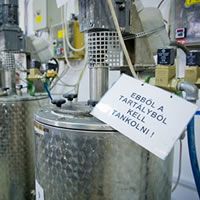
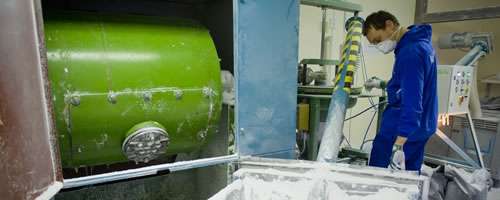
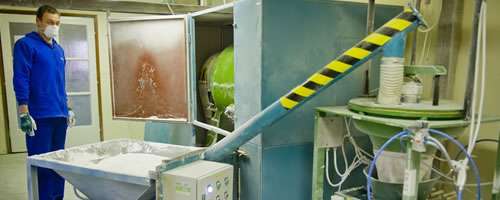
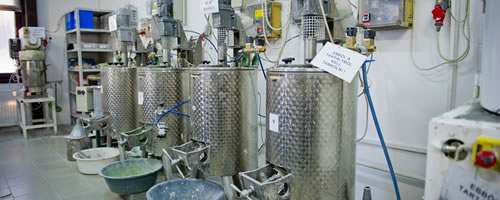
By continuous stirring we add plasticized materials into the blended perfectly clear and homogeneous powder this will lead later to achieve a fluid consistency. In this phase the premium class material is also hermetically handled as during the stirring the mixture is able to absorb and closes the oxygen which is at the expense of high quality. After several hours of mixing the paste becomes suitable condition for molding.
Each step of the manufacturing process is specified by strict quality control. In this working phase the viscosity and the accurate setting of the viscosity measurement is the most important. In order to reach the perfect quality and perfect products we use the most modern high tech measurement tools.
3. Molding
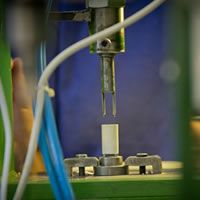
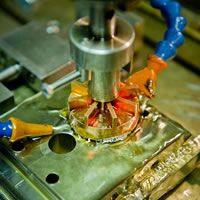
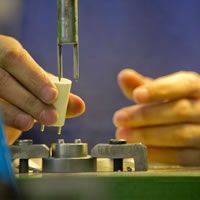
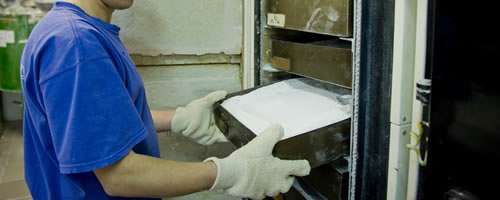
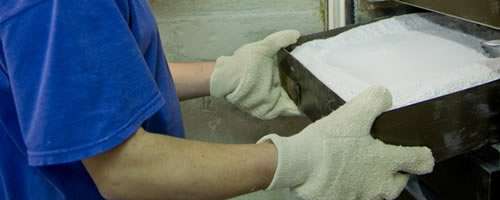
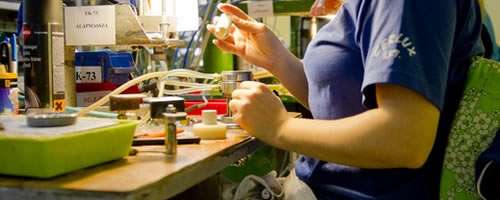
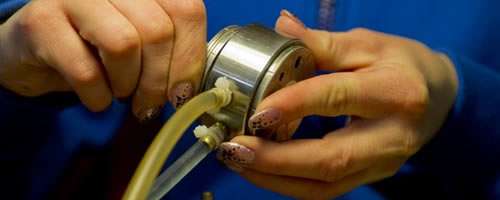
The molding process is determinative as this is the phase where the product takes its final form. The complex custom made parts can not be automated and are made on manual machines. After molding the employee opens the tool and takes the finished parts out. Before putting the part on the tray inspecting it from a quality point of view and looking for any air bubbles cracking looking for traces of damage on it and remove the burrs formed during the molding.
The parts in larger series are manufactured on the PLC controlled automatic machines. Paralell 2-8 pcs of products are produced at the same time in a single operation. The machine is familiar to mold up to 10 000 pieces of parts a day.


4. The deburring
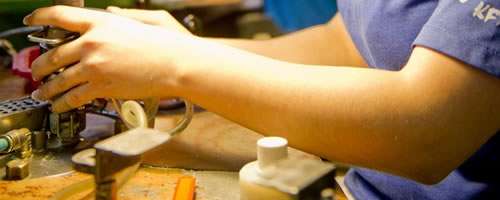
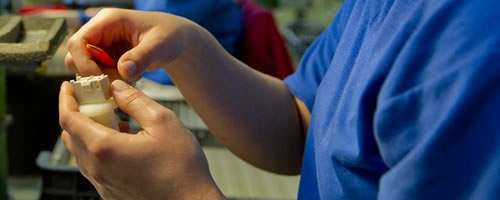
The automatic devices made ceramic parts come in this room in order to quality control checking and forming the perfect shape where the inlet stubs of the molding tools are removed.
5. Loading & firing
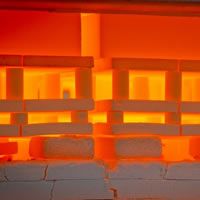
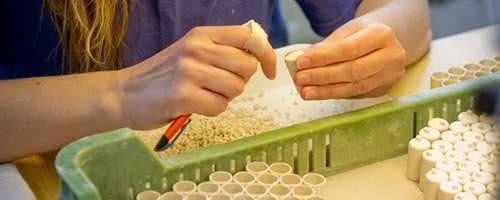
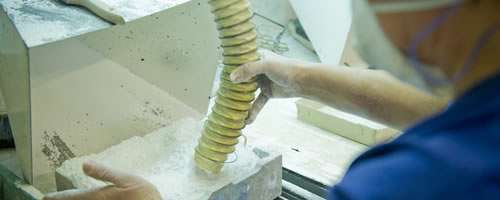
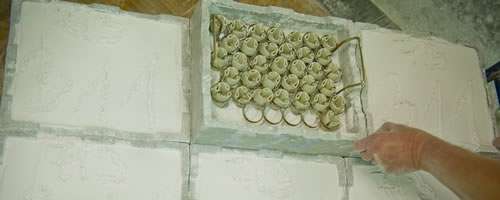
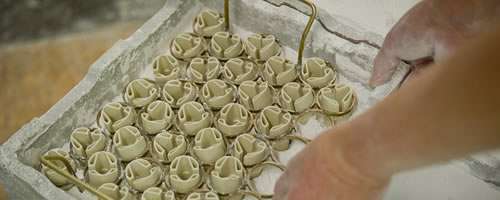
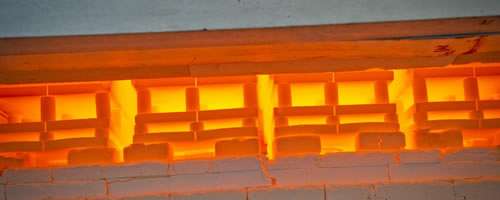
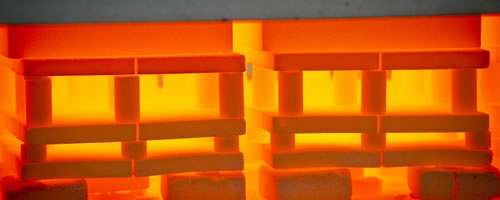
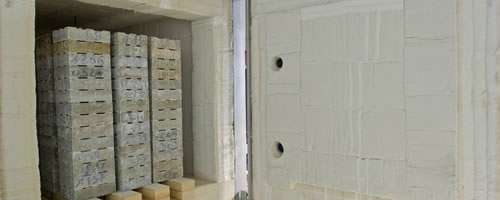
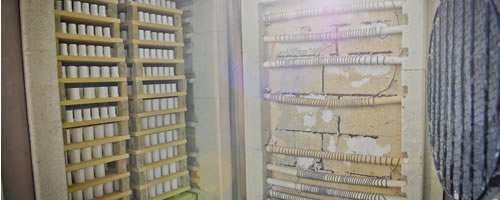
The firing prepared products are placed in an alumina bed, and then the embedded parts are also covered by alumina. The resulted bricks make the piles, which are fired at 1 000 ° C. The low fiery ceramic burns out during this firing, receives its final shape suitable for surface treatment. The high fiery ceramic becomes harder having brittle chalk-like texture and requires another special firing at 1550 -1600 ° C to gets its final form ready for surface treatment.
6. Drizzle
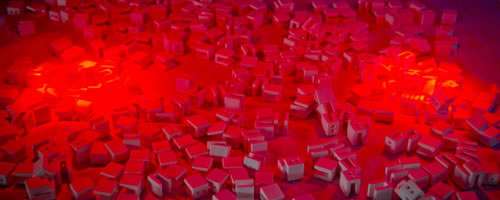
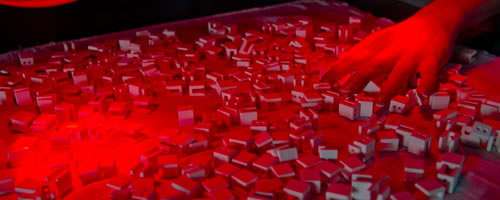
After burning the cooled piles get back into this room where the contents are turned into a sieve for sifting. The purified alumina can be used again. The fired final product remaining on the sieve is blown off in the dust cabinets. In addition, this is the place where not only the cleaning of the parts is done but also the primary form and quality testing take place. The firing process caused visible malformations and cracks are also filtered out here. Beside this it is also documented how many pieces were fired and returned.
7. Quality Control
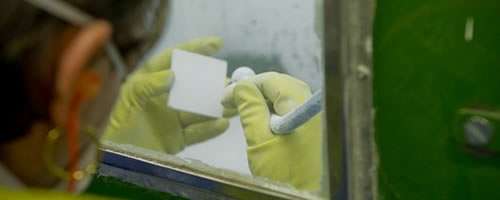
Prior to the surface treatment of the fired final product a final comprehensive quality control is waiting for the part. According to the customer needs and the complexity of the product parts are checked randomly or part by part. We focus on critical dimensions. In case of the larger volume parts we perfectly use the quality control automatisation. The PC controlled machine not only investigates but also classifies the products according to the given parameters.
The fired and verified semi-made product goes either for surface treatment or in to the warehouse for storing. Warehouse has been set up in order to satisfy the increased customers' needs. From here we are able to cover any sudden unexpected orders on time and deliver the urgent items even by air, in one - two days to any point on earth.
8. Surface treatment
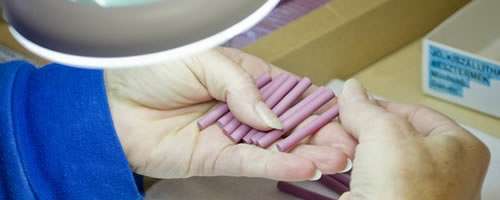
The products are sent for surface treatment, will obtain their final status by glazing, wearing or polishing.
- Glazing:
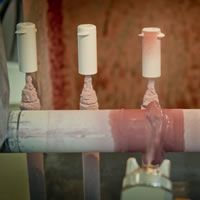
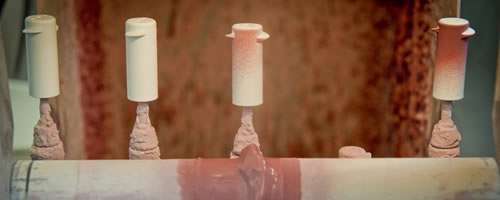
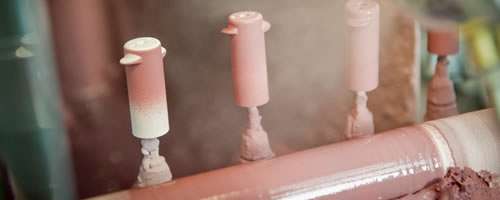
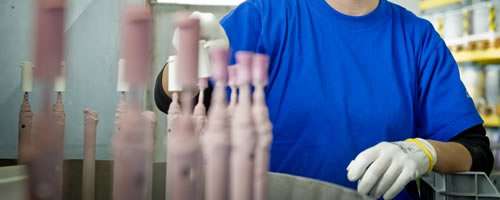
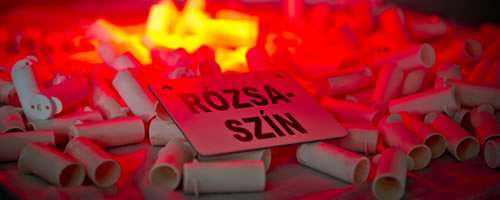
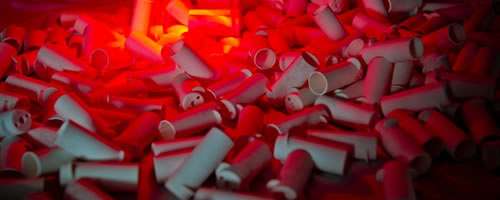
The glazes are glass and metal oxide based modern environmentally friendly materials. Currently our products are offered in 35 different colours. The fast, effective and consistent glazing is provided by a fixed, high pressured paint sprayer. Thanks to environmentally friendly quality, the unused glaze is recyclable. The application of coating is followed by drying. The water transpires on proper temperature so at the end of the line products are touchable and free to organize. Then, the products are restacked for firing in one of the five glazing furnace at the temperatures above 900 ° C - Wearing:
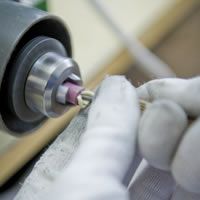
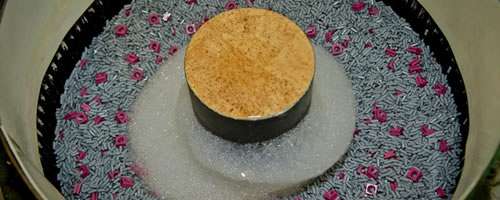
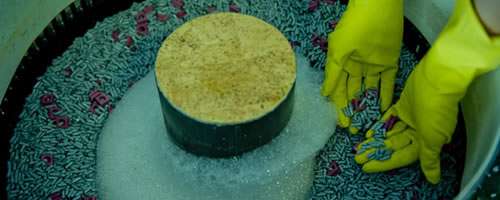
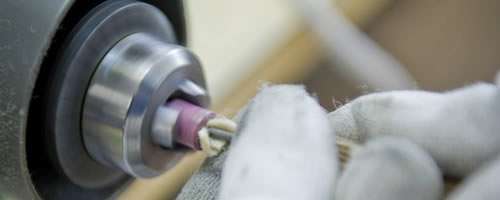
Another surface treating method of the rough ceramic surface is the wearing. The wearing granule containing diamond chips decreases the roughness of the ceramic surface, getting smooth, polished characteristic and blunted edges. The difference between the materials is significant. The wearing cycle of the high fiery premium ceramic components is 80 times longer than the cycle of the ordinary materials. - Polishing:
The final phase of the high fiery K-5 premium ceramic is the polishing. Due to the hardness of this material it can be achieved only by diamond-containing materials. Taking the expected surface roughness into consideration, the product can be extra polished or super polished which results in the smoothness and the shine of it.
9. Labelling
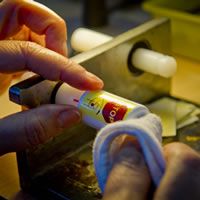
Surface treatment is followed by the labelling, which is about to place the logo or label requiried by the costumer on the glazed surface of the product. It can be made by decals or by pad printing. The pad printing process is automated, which includes the print and the burn on process as well in one step. The great advantage of the process is the speed but it imposes the lettering size and colour. However, the stickers are slower there are no limits in size and colour. Any label size can be applied to the surface.
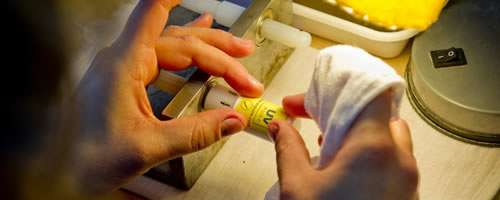
10. Assembly
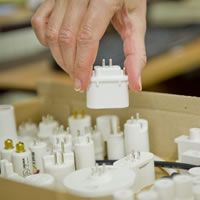
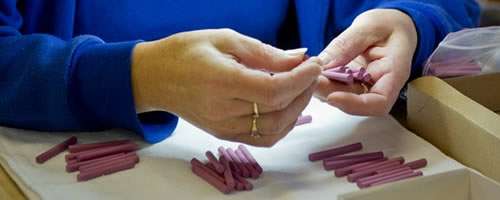
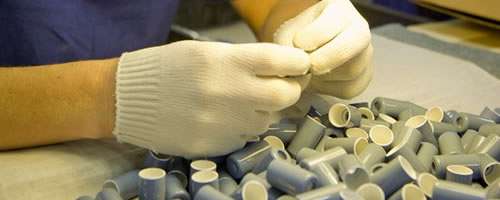
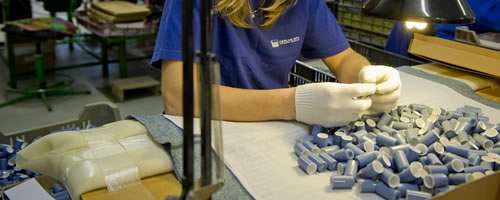
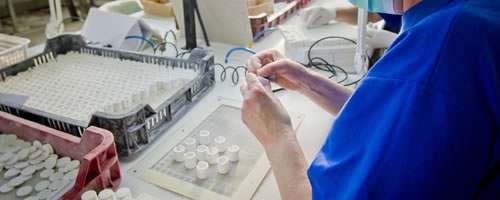
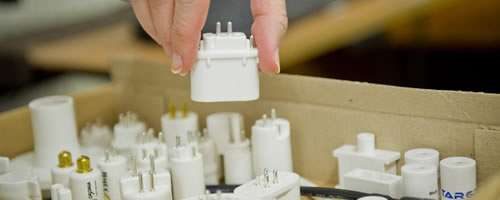
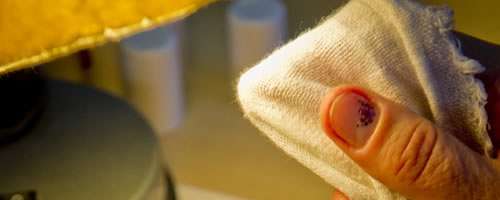
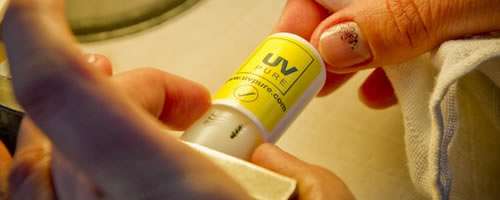
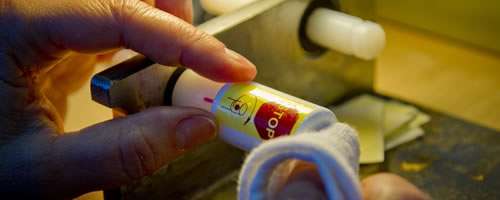
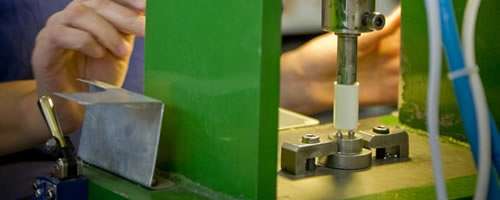
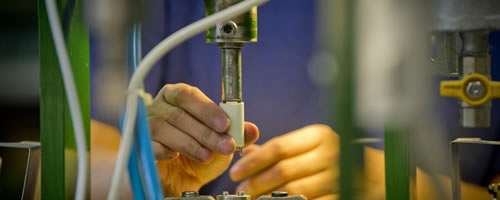
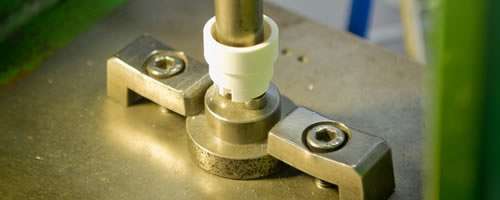
Based on the customer’s needs as the last station the surface treated products need to be assembled. The pin stacking method of the simpler parts is automated. According to the required speed this is followed by a final quality control, where the pieces are inspected visually and made sure that the product is ready for packaging.
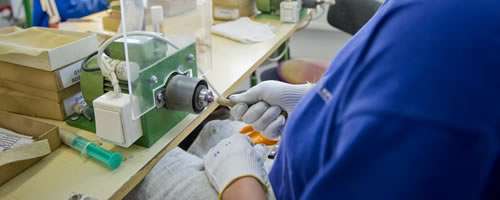
The complicated parts are made in smaller batches with higher attention. The pieces are carried out by the staff person, who makes also the QA checking and inserts the pin fixed by pressure.
Knowing the whole process it is seen that although the preparation of our ceramics seems to be simple and fast, the full production cycle of some products can reach the 1-3 weeks without having a break in the process. This is especially due to the extreme production technology, the multiple -sometimes up to six times- firing and careful, strict quality control.
Production process
- 1. Raw material preparation
- 2. The preparation of ceramic molding dollop
- 3. Molding
- 4. The deburring
- 5. Loading & firing
- 6. Drizzle
- 7. Quality Control
- 8. Surface treatment
- 9. Labelling
- 10. Assembly